
You do not need to buy expensive toys to make your baby smarter or more active. Instead, there are 10 simple activities that you can easily do at home with your baby. If you follow these tips consistently, your baby’s brain will definitely grow stronger and sharper.
A baby’s brain grows very rapidly in the early years of life. Millions of brain cells keep forming connections with each other. Signals travel quickly from one side to the other, and the baby’s brain becomes sharper. The more activities you do with your baby, the faster those brain cell connections get supercharged and boosted.
10 Brain Boosting Activities for Babies
1. Serve and Return
Do not think that your baby is too young to understand anything. A baby starts understanding things even from inside the mother’s womb. The environment around the mother affects the baby even before birth, which is why the mother’s health is very important.
Serve and return works just like a tennis or table tennis match. One person serves the ball and the other returns it. Similarly, when your baby smiles at you, you respond. When your baby makes sounds, you respond. When your baby hands you something, you respond positively — for example by saying “what a nice block” or “what a great toy.” When you do this activity with your baby, brain cell connections get supercharged rapidly, signals travel from one side to the other and back, and your baby’s brain becomes stronger. So interact with your baby in a positive way right from the start.
2. Let Your Baby Struggle a Little
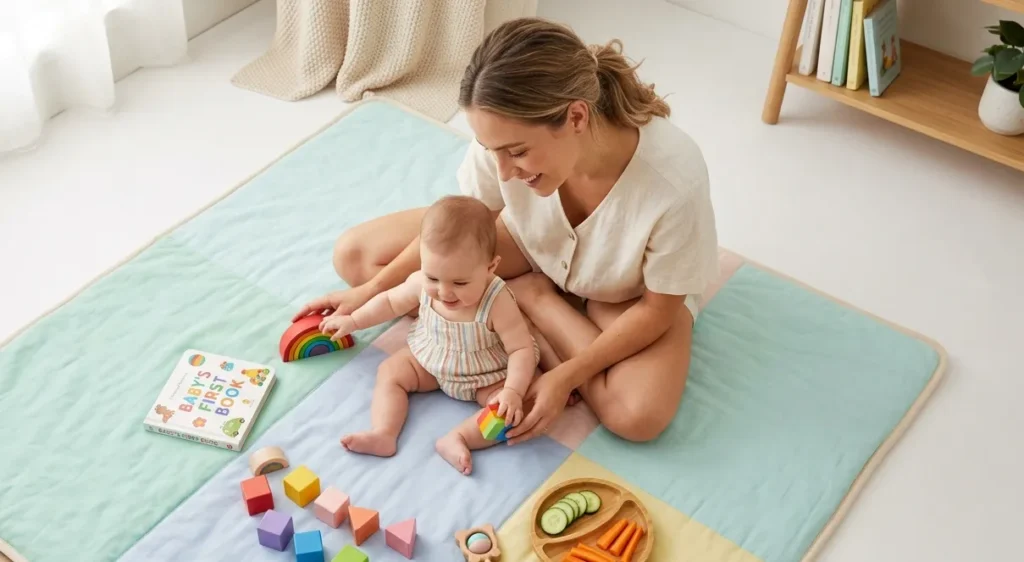
Whenever a baby cannot do something, we rush to help right away. Instead, let your baby try a little on their own so that their brain cells connect faster and they can think about what to do next. If your baby falls slightly or gets a small bump, do not panic. Pick them up, comfort them, and explain calmly that falling and getting hurt is a normal part of life and that we get back up when we fall.
Let your baby explore on their own, find things, and pick things up according to their age. If they are placing shaped blocks in the wrong place, pause and let them figure out the right position themselves. Do not hit the table when your baby gets hurt just to distract them. Instead, comfort them in your own words and help them understand the situation calmly. Do help your baby according to their age, but also allow them to observe and explore what is around them.
3. Read Books to Your Baby
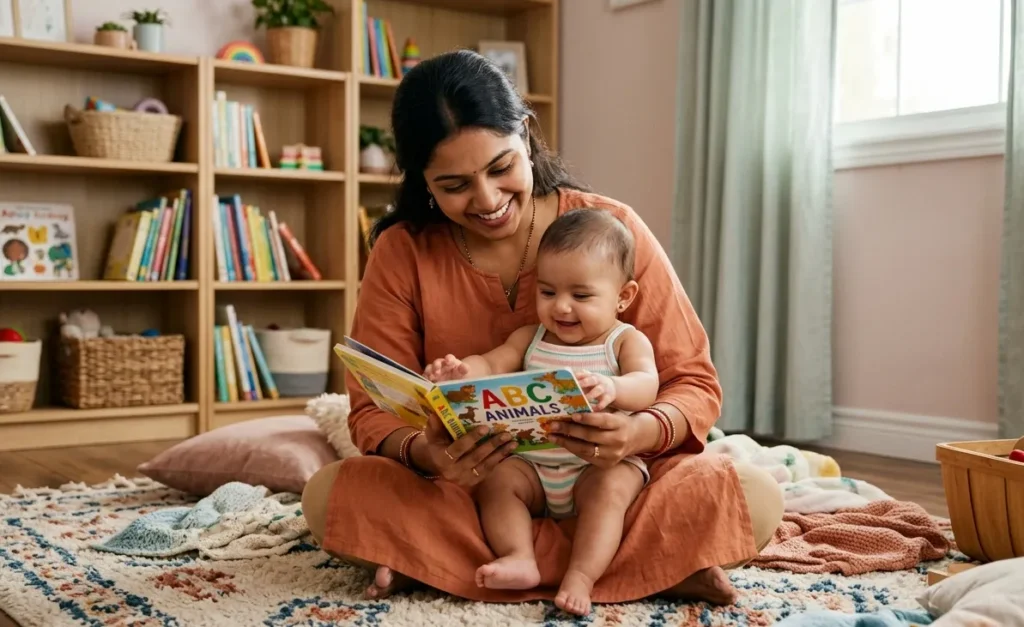
Make it a habit to read at least one small book with your baby. Babies who are read to, and who are shown colors and pictures in books, develop their brains much more quickly. Looking at pictures and hearing words not only improves communication between parents and children but also greatly expands the baby’s vocabulary. The brains of such children grow at a much faster rate.
4. Let Your Baby Help You
If your baby wants to help you, let them. When you are doing a task, include them. Let them assist you. This builds a habit of putting their toys back in the right place and organizing their belongings. Whether it is small toys or clothes, as soon as your baby starts understanding you and walking around, let them help with small tasks like watering plants.
Through this, your baby makes a plan, organizes it, and completes it. This gives children the feeling of “I did it!” which builds their confidence while also helping their brain grow faster.
5. Provide Sensory Stimulation
Show your baby colors. Do not keep them confined indoors. Let them walk on grass. Take them outside. Let them hear the sounds of birds. Give them food items they can hold and eat with their hands, such as soft cucumber, cut carrots, or pieces of fruit. They feel and touch these things, which gives the baby sensory stimulation. They see colors, feel textures, and their brain cells connect rapidly, sending signals. This leads to excellent brain growth in your baby.
6. Include Brain-Boosting Foods in Your Baby’s Diet
Include food items in your baby’s diet that sharpen the brain. All foods that contain omega-3 fatty acids are excellent for brain growth. In natural foods, fish is a great source of omega-3 fatty acids. Other great options include eggs, vegetables, yogurt, and dry fruits — especially almonds and walnuts, which you can crush or grind and give to your baby. Apart from diet, omega-3 fatty acid supplements are also available, which you can give to your baby on the advice of your doctor.
7. Fix Your Baby’s Sleep Routine
Your baby’s sleep time is very important. There should be a fixed bedtime routine. It should not be that one day the baby sleeps at 7 PM, the next day at 9 PM, and sometimes stays awake jumping around until midnight. Your baby’s bedtime routine should be fixed and consistent.
When sleep is complete and the baby sleeps well at night, their brain development is excellent. This is because everything the baby learns, feels, and experiences throughout the day requires rest to process. When the baby sleeps, the brain recharges and memories are formed. Set a bedtime routine before sleep, such as reading a book, giving a bath, or a massage. The important thing is that the routine must be consistent every night.
8. No Screen Time for Young Children
Do not give mobile phones or tablets to small children. Nowadays, many parents hand over a mobile phone to keep the child busy — whether during toilet training or mealtime. You should not do this at all. Excessive screen time has been observed to cause autism-like symptoms in children, commonly referred to as virtual autism. A child with this condition does not pay attention, does not respond to their name, remains withdrawn, is absorbed in their own world, and communicates very little. These symptoms are not only concerning for parents but also for doctors.
Children under 2 years old should have zero screen time. Children above 2 years should also have very limited screen time — less than 30 minutes per day — and only for educational videos.
9. Physical Activities and Outdoor Play
Do not keep your children locked inside the house or confined to rooms. Take them outside. Play with them. Have them play games. Let them play football or tag. Not only does this sharpen a child’s brain and support excellent brain growth, but their physical body also becomes stronger and their overall physical health improves.
When children play together, they develop the habit of talking and communicating with each other. In today’s world, most children are busy with mobile phones at home and only talk when absolutely necessary. Encourage your children to go out and interact with others.
Important Tips
Things to Do
- Start interacting positively with your baby right from birth, even from pregnancy.
- Let your baby struggle a little with tasks — it supercharges brain cell connections.
- Read books, show pictures, and narrate colors to your baby every day.
- Include omega-3 rich foods like fish, eggs, walnuts, and almonds in your baby’s diet.
- Keep a fixed and consistent bedtime routine for your baby every night.
- Allow your baby to help with small household tasks like watering plants.
- Take your baby outdoors regularly to experience nature, sounds, and textures.
Things to Avoid
- Do not give mobile phones, tablets, or screens to children under 2 years of age.
- Do not rush to help your baby with every single task — let them try first.
- Do not panic or create drama when your baby gets a small bump or falls.
- Do not keep children indoors all day — outdoor play is essential for brain development.
- Do not let screen time exceed 30 minutes per day even for children above 2 years old.
Frequently Asked Questions
What is serve and return activity for babies?
Serve and return is an interactive activity where a parent responds to every action or sound the baby makes. Just like in a tennis match where one player serves and the other returns, when a baby smiles or makes a sound, the parent responds back. This back-and-forth interaction rapidly builds connections between brain cells and strengthens the baby’s brain development.
At what age should I start brain boosting activities for my baby?
You can start right from birth, and even before. A baby begins to understand the environment around them while still inside the mother’s womb. The mother’s health and the environment during pregnancy also have a significant impact on the baby’s brain. So positive interaction and a healthy environment should begin as early as possible.
What foods help boost a baby’s brain development?
Foods rich in omega-3 fatty acids are excellent for brain growth. Natural food sources include fish, eggs, vegetables, yogurt, and dry fruits — especially almonds and walnuts. These can be crushed or ground and given to babies. Omega-3 supplements are also available but should only be given on the advice of a doctor.
Is screen time harmful for babies and toddlers?
Yes, excessive screen time is harmful for young children. Children under 2 years of age should have zero screen time. For children above 2 years, screen time should be less than 30 minutes per day and restricted to educational videos only. Too much screen time can lead to virtual autism-like symptoms, including reduced attention, not responding to their name, withdrawal, and decreased communication.
Why is a fixed sleep routine important for baby brain development?
Sleep is when a baby’s brain recharges and forms memories. Everything the baby learns and experiences during the day gets processed during sleep. An irregular sleep schedule disrupts this process. A consistent bedtime routine — such as reading a book, bathing, or a gentle massage before sleep — ensures the baby gets quality rest and supports healthy brain growth.
Should I let my baby struggle with tasks or help immediately?
It is better to let your baby struggle a little before stepping in to help. When a baby tries to figure things out on their own, their brain cells form connections much more quickly. If you rush to help every time, the baby misses the opportunity to develop problem-solving skills and resilience. Always provide age-appropriate support when needed, but allow your baby some time to explore and try on their own first.
Conclusion
You do not need expensive toys or gadgets to boost your baby’s brain development. Simple, consistent activities done at home — such as serve and return interactions, reading books, providing sensory experiences, a nutritious diet with omega-3 rich foods, a fixed sleep routine, and plenty of outdoor physical play — are enough to supercharge your baby’s brain cells and support strong, healthy growth. Equally important is avoiding excessive screen time, which can negatively affect your baby’s development. Take care of yourself and your children.