

So you are thinking of becoming an AI engineer. That is a smart choice, because by 2030 it is expected to be one of the highest paying tech careers. In India, fresher AI engineers are earning between 5 to 12 lakh, and those who have the right degree, skills, and experience are earning more than 60 lakh.
The demand for AI engineers is only going to keep increasing. Globally, the AI market is growing by more than 30 percent, and in India, this number is even higher, at more than 38 percent.
But there is a bitter truth that people often do not talk about.
The Problem Most Freshers Face
These days, having a degree alone is not enough. This is the reason why some people have a degree but still do not have a job. The real skills required to become an AI engineer are possessed by very few people.
This is why the Indian AI talent gap has reached 53 percent. In simple terms, 53 percent of AI jobs cannot be filled because skilled AI engineers are not available.
However, those who do have the right skills are in very high demand. There are freshers who have received multiple job offers with a starting salary of more than 15 lakh.
What Top Freshers Are Doing Differently
So what are these freshers doing differently? This article will walk you through it.
The roadmap shared here comes from a Senior Software Engineer based in the UK, originally from Ahmedabad, Gujarat, currently working at JPMorgan Chase, one of the world’s leading investment banks and a major player in AI adoption.
This article explains how you can become a successful AI engineer, what you need to learn step by step, and which crucial mistakes you need to avoid that often end the job chances of freshers.
The AI engineer journey has been divided into four core phases, followed by an optional fifth phase that can give your profile a real edge.
AI Engineer Roadmap at a Glance
| Phase | What to Learn | Estimated Time |
|---|---|---|
| Phase 1: Foundation | Python, Git, APIs, Cloud Basics (AWS) | 9 to 13 weeks |
| Phase 2: Data Handling | SQL, Pandas, NumPy, Data Visualization | 8 to 12 weeks |
| Phase 3: Mathematics | Core math for machine learning | 4 to 6 weeks |
| Phase 4: Machine Learning | Classical ML, Deep Learning, PyTorch, Portfolio Project | 9 to 11 weeks |
| Phase 5: The Money Phase | LLMs, RAG, LangChain, LangGraph, 2 Portfolio Projects | 4 to 7 weeks |
Where to Start: The Foundation
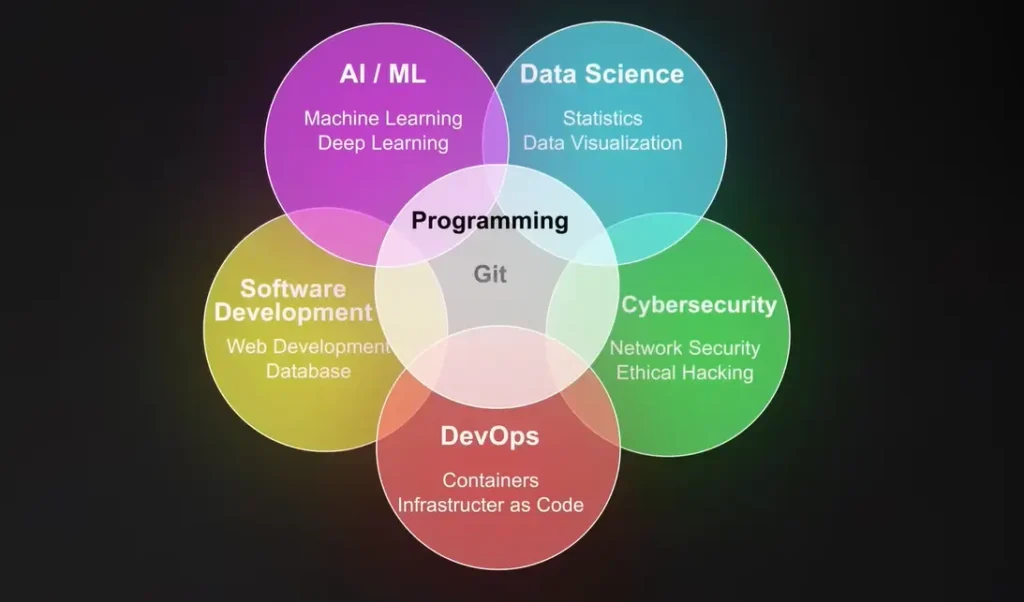
Before jumping into the phases, here is an important question. What is common between AI/ML, Data Science, Cybersecurity, and Software Development?
The answer is that all of these require foundational computer science skills: programming, Git, DSA (Data Structures and Algorithms), APIs, and knowledge of cloud platforms. If you learn these skills well, you can build a career in any of these fields, which is exactly why this is the best place to start.
Phase 1: Foundation
In this phase, the first thing to learn is Python, since there is no better programming language for AI and ML work.
Once you start learning Python, immediately begin building small projects such as a file organizer, a calculator, or a web scraper.
Pro tip: Install Cursor or GitHub Copilot and learn how to prompt it properly. If you want to become an AI engineer and you are still not using a coding assistant in 2026, you will fall far behind. If you can give 3 to 4 hours daily, you can learn Python in three to four weeks.
Next, learn Git. Git helps you manage your code safely and collaborate easily with a team. One week is generally enough to learn Git, and every project you build should be pushed to it.
After that, learn how to work with APIs, since real world machine learning systems interact through APIs. First, understand API basics, then learn how to make API calls, and finally learn how to build your own APIs using frameworks like FastAPI and Flask. In two to four weeks, you can become confident working with APIs.
Lastly in this phase, learn to work with cloud platforms. Cloud platforms like AWS, GCP, or Azure are an essential part of the modern tech stack.
It is recommended to start with AWS since it is the most popular. First, learn the cloud basics, then move on to core cloud services. In three to four weeks, you can gain real world level cloud exposure.
Phase 2: Data Handling Skills
Once your foundation is strong, the focus shifts to data handling skills, which are necessary for data related careers such as AI, ML, Data Analyst, and Data Scientist.
The most important skill here is SQL, since you will need to work with real world data, which is generally stored in SQL databases such as MySQL, PostgreSQL, BigQuery, or Snowflake. SQL is essential for accessing, querying, and manipulating this data. This usually takes roughly three to four weeks.
Next, learn Pandas. As an AI/ML engineer, 60 to 70 percent of your work involves cleaning, exploring, and transforming data, and Pandas makes this process much easier. This typically takes two to three weeks.
After that, learn NumPy. As an engineer, a large part of your core work involves numbers, matrices, vectors, and calculations, and NumPy makes this process fast and efficient. This also takes around two to three weeks.
Lastly, in this phase, learn data visualization. Data is usually very messy, and if you cannot visualize it, it becomes difficult to understand and to build good models. Learning Matplotlib and Seaborn for this purpose takes roughly one to two weeks.
Phase 3: Mathematics
Once data handling is clear, it is time to learn math. Many people get nervous when they hear the word math, but it is not as difficult as it sounds, especially if you study from the right resources.
Math is important because without it, you will not be able to understand how models learn, how they make decisions, or how to choose the right model for a given problem.
You do not need to go too deep into every topic. The goal is to learn just enough to understand machine learning concepts in the next phase, and to be able to answer interview questions such as “What is gradient descent?”
This phase can usually be completed in four to six weeks.
Phase 4: Machine Learning
After completing Phase 3, you are ready for real machine learning.
First, learn classical machine learning to understand the concepts behind self-driving cars, fraud detection, and recommendation systems. This is also the most commonly tested topic in interviews, particularly around which algorithm to use and when.
For every algorithm you learn, focus on three things: what it is, when to use it, and when not to use it. Alongside this, you should also learn to use the Scikit-learn library. This phase generally takes five to six weeks.
Next, learn deep learning, since today’s cutting-edge applications such as image recognition, language models, and speech technology are all based on it. Transformers and the attention mechanism are especially important here, since they form the foundation of LLMs (Large Language Models).
For this, it is recommended to learn PyTorch rather than TensorFlow, since by 2026 the market has largely shifted toward PyTorch, with companies like Meta, OpenAI, and Anthropic all using it. This usually takes four to five weeks.
After this phase, build your first portfolio project: an end-to-end machine learning project. Pick something real to predict, such as fraud detection, customer churn, or house prices, and build the complete pipeline from data collection to model evaluation. Push this project to GitHub with a proper README file.
An important note for freshers: classical machine learning and deep learning are enough at this stage. You do not need to learn more advanced topics right away. Even the best machine learning engineers do not know everything. They simply learn the right things at the right time.
Phase 5: The Money Phase (Optional but Valuable)
This phase is not mandatory for freshers, but completing it can make your profile stand out significantly. Before this phase, you are essentially a machine learning enthusiast. After completing it, you become an AI engineer, and these are the exact skills for which companies are paying freshers 15 to 20 lakh in 2026. This is currently the most in-demand skill set, yet very few people have it.
First, learn to work with LLMs, since almost every AI product today is built on top of them. If you cannot use LLMs programmatically, you risk being left out of the field. This is considered easy and exciting to learn, and can be completed in one to two weeks.
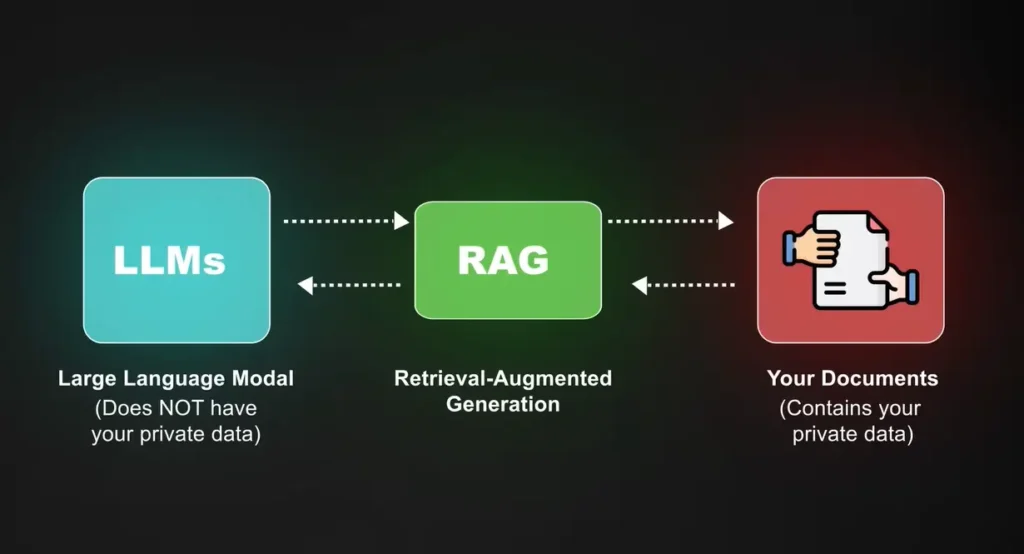
Next, learn RAG (Retrieval-Augmented Generation), which is the most in-demand skill of 2026. LLMs do not have access to your private data by default, and RAG gives them the ability to answer questions based on your own documents.
If you can build a working RAG system, you can place yourself in the top 10 percent of freshers. This usually takes two to three weeks.
After that, learn LangChain and LangGraph. These frameworks make it easier to build RAG systems and AI agents at scale, and they are essential for production-level applications. This typically takes one to two weeks.
Finally, build two important portfolio projects, since these are the projects that can actually get you hired:
- A RAG chatbot that answers questions based on your own documents.
- An AI agent that automates a useful task.
Important Tip: Your resume should include a live, working URL for at least one of these projects. Very few freshers actually do this, which makes it a strong differentiator.
Also Read: Best Resume Format for Freshers in 2026: A Step-by-Step Guide to Get Shortlisted
Common Mistakes Freshers Must Avoid
Mistake 1: Passive Learning
This is the most common mistake, and almost every beginner makes it at some point. The typical approach is to watch a 10 to 20 hour course first and plan to build something afterward, but this approach does not work well.
By the time the course ends, around 70 percent of what was learned is already forgotten. This is often called “tutorial hell,” where there is an illusion of learning, but the moment you sit down to build something on your own, your mind goes blank.
The right approach is to practice two to three times more than what you learn. For example, if you can dedicate 4 hours a day, a good breakdown looks like this:
- One hour learning concepts: watching videos, reading documentation, and understanding new topics.
- Two hours of hands-on building: applying what was just learned. If you learned Pandas, clean a Kaggle dataset. If you learned RAG, build your own chatbot. From day one, also practice AI-assisted coding using tools like Cursor or GitHub Copilot.
- One hour on DSA (Data Structures and Algorithms), since this is almost mandatory for placements. Solving one to two problems daily is recommended.
Following this consistently can put you ahead of 99 percent of students.
Mistake 2: Learning in Isolation
Learning entirely alone has its limits. It is common to get stuck on a problem for hours, only to have it resolved quickly once you work with someone else. When motivation drops, a study partner can help bring it back.
To avoid learning in isolation, find study buddies on LinkedIn or Discord, and join AI/ML communities on Reddit or Kaggle.
When it is time to start applying for jobs, take mock interviews with each other. Real clarity often comes only when you discuss, explain, and teach concepts to someone else.
Mistake 3: Applying Too Late
Many freshers believe they should learn everything first and only apply for jobs afterward. This is a mistake to avoid.
As soon as Phase 4 is complete, meaning you know Python and basic machine learning and have built at least one project, you should start applying.
An internship or any form of work experience is generally more valuable on a resume than three personal projects alone. Every month spent without applying is a month of potential real-world experience missed. It is better to start applying as early as possible rather than waiting to feel completely ready.
Important Tips
- Use an AI coding assistant like Cursor or GitHub Copilot from day one.
- Push every project to GitHub, with a proper README file.
- Spend two to three times more time practicing than consuming lessons.
- Solve DSA problems daily, since they are nearly mandatory for placements.
- Do not learn alone. Join communities and practice mock interviews with peers.
- Start applying for jobs as soon as Phase 4 is complete, rather than waiting to “finish everything.”
- Include a live, working project URL on your resume.
FAQs
Q1: How long does it take to become an AI engineer?
The exact duration depends on the hours dedicated daily, but each phase has its own estimated timeline, ranging from one to two weeks for smaller topics up to five to six weeks for deeper topics like classical machine learning.
Q2: Do I need a strong math background to become an AI engineer?
A full advanced math background is not required. The goal is to learn enough math to understand how models work and to confidently answer common interview questions like “What is gradient descent?”
Q3: Which programming language should I learn for AI engineering?
Python is recommended as the primary programming language, since it is considered the best fit for AI and ML work.
Q4: Should I learn TensorFlow or PyTorch for deep learning?
PyTorch is recommended over TensorFlow, since the industry has largely shifted toward PyTorch, with major companies like Meta, OpenAI, and Anthropic using it.
Q5: Is a portfolio project really necessary to get hired?
Yes. Building end-to-end portfolio projects, such as a machine learning pipeline or a RAG chatbot with a live URL, is highlighted as one of the most important factors that can help freshers stand out and get hired.
Q6: What is the biggest mistake freshers make while learning AI?
Passive learning, meaning watching long courses without enough hands-on practice, is described as the most common mistake that leads to “tutorial hell.”
Conclusion
Becoming a successful AI engineer in 2026 is less about knowing everything and more about following the right roadmap in the right order: strong foundations, data handling, math, machine learning, and finally, in-demand skills like LLMs and RAG.
Most people who start this journey will eventually stop following through, but those who stay consistent with action and discipline are the ones who end up landing high-paying AI engineering roles.