Before you start freelancing, there are five critical mistakes you should never make. Many people create accounts on platforms like Fiverr, Upwork, and Freelancer.com, and then complain that they cannot find any work. The reason is almost always the same, they skip the basics.
In this article, we are going to walk through all five of these mistakes in detail so that you can avoid them and build a successful freelancing career from day one.
Mistake 1: Starting Freelancing Without Learning a Skill
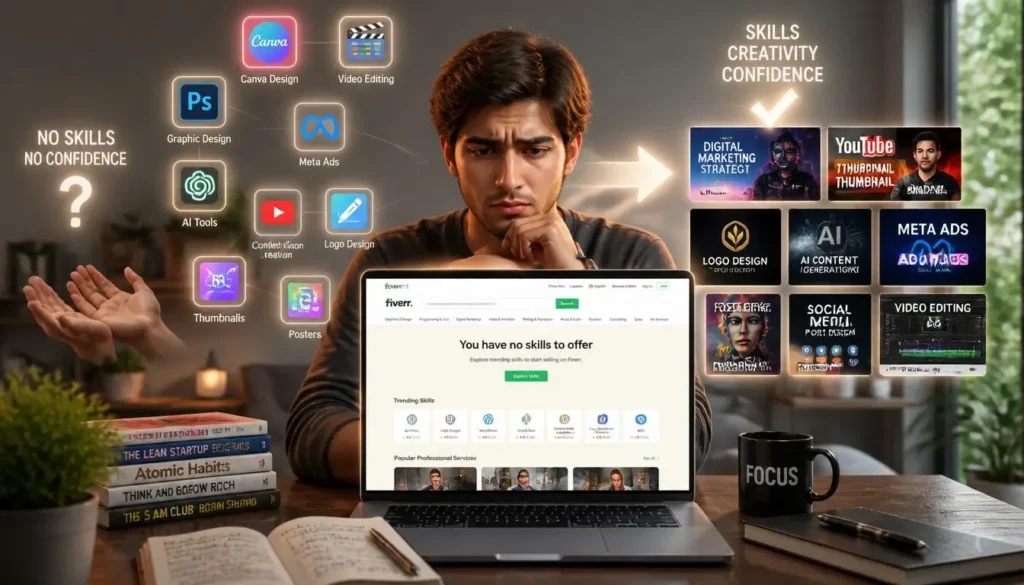
The very first and most important mistake is jumping into freelancing without having any skill to offer.
Freelancing, by its very nature, is skill-based earning. If you have no skill, what service will you offer to a client?
For example, if you have designing skills, you can offer logo design, poster design, or thumbnail creation. But if you have no skill at all, there is nothing you can offer, and no client will give you work.
If you genuinely want to start freelancing, you need to pick one skill and focus on mastering it. The choice of skill depends entirely on your interest. Some of the most trending and in-demand freelancing skills right now include:
- Canva designing
- Video editing
- Content creation
- AI tools
- Graphic designing
- Meta Ads (Facebook/Instagram Ads)
Many people are already using tools like Canva to offer design services to clients and are generating a solid income from it, and this is completely real.
The key point is that you need to reach an advanced level of mastery in whichever skill you choose. Pick one, learn it properly, and then start your freelancing journey.
Mistake 2: Not Building a Portfolio
The second major mistake is not creating a portfolio, and many beginners do not even know what a portfolio is.
A portfolio is simply a collection of your work that introduces you to potential clients. It includes:
- Your name and a short introduction
- The skills you have and how much experience you have in them
- Examples of work you have done before, whether for a paid client or even practice work you did for free
For example, if you are a designer, your portfolio would include logos, posters, and thumbnails you have already created.
When a client contacts you on Fiverr, Upwork, or social media, the first thing they ask for is your portfolio. They look at it to decide whether to trust you and give you the work.
A client checks your portfolio to see your experience level, the type of work you can do, and the quality of your designs.
Only after reviewing your portfolio does a client decide to hire you. This is exactly how you get clients and how you get work in freelancing.
Mistake 3: Creating a Low-Quality Profile
The third mistake is building a poorly made, low-quality profile.
Many beginners rush through the profile setup and end up with a profile that has no proper name, no good profile picture, no description, and no portfolio attached. This is a serious problem.
When any client visits your profile, they should immediately feel that you are a genuine, professional freelancer. Your profile is your identity.
If your profile looks unprofessional or incomplete, the client will see it but will never message you, and will never give you work.
Your profile should include:
- A professional name
- A clear profile picture (DP)
- A good background image
- A well-written description
- Your portfolio
It does not matter whether your profile is on Instagram, YouTube, LinkedIn, Fiverr, or Upwork. Wherever you build your work profile, it should be built in a way that earns instant trust from any client who visits it. Trust is what leads to work.
Mistake 4: Weak Client Communication

The fourth mistake is having poor communication skills, especially in English.
On platforms like Fiverr and Upwork, all client communication happens in English. Most clients, especially foreign clients, will message you in English, and you need to respond professionally in English.
If you are not confident in English, you can use tools like Google Translate or ChatGPT to help you craft professional replies.
The important thing is that you should not hesitate. Respond professionally, ask the right questions, and understand the client’s requirements before sending an offer.
Here is a simple process to follow:
- When a client messages you, understand what they need.
- Ask them about their requirements, what kind of work they want, what style, what details.
- Clarify all their doubts and queries first.
- Once you understand their needs, send them your offer.
Good communication is what turns a message into an order.
Mistake 5: Expecting Quick Results and Falling for Scams
The fifth and final mistake, and one that almost every beginner makes, is expecting fast results.
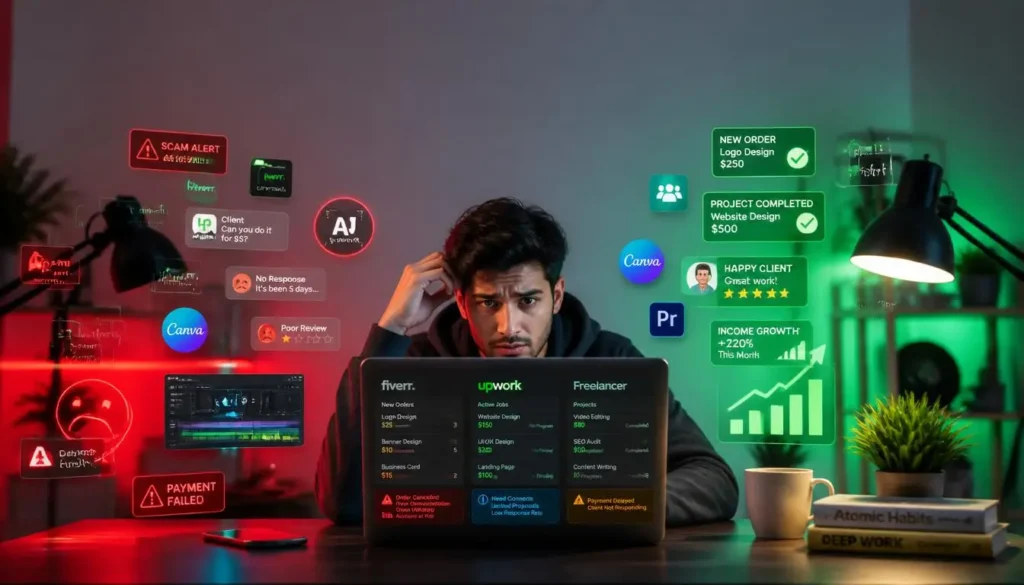
When you create a profile on Fiverr, not every client who contacts you is legitimate. There are many scammers on the platform, and beginners are their most common target.
Before you start working on Fiverr, you need to understand how the platform works:
- What are gigs and how do you create them?
- How does the payment system work?
- How do you send an offer to a client?
How Fiverr’s genuine payment process works:
- A genuine client sends you their requirements (for example, a reference file for logo design).
- You send them a custom offer, say $10 or $50.
- Once they accept the offer, the timer starts, and the client pays first.
- You complete the work within the agreed timeframe (1 day, 2 days, 3 days, etc.).
- After you deliver the work, the $10 amount clears to your Fiverr wallet within 14 days.
- You can withdraw it anytime after that.
How scammers try to trick you:
A genuine client on Fiverr will never:
- Ask for your Gmail address
- Share suspicious external links
- Ask for your debit card details
Scammers often message beginners saying things like, “I need to pay you but I am stuck, please share your debit card details so I can transfer the money.” Beginners, eager to receive payment, share their details and end up getting scammed.
The solution is simple: before you start actively taking orders, learn how Fiverr works properly. Study the platform, understand the gig system, and know how to identify genuine clients. Once you are trained and informed, you will be far less likely to fall into these traps.
FAQs
Q1: Can I start freelancing without any experience?
Yes, but you must first learn a skill. Even if you have no paid experience, you can create practice work and use it as your portfolio.
Q2: What are the best skills to learn for freelancing?
The most in-demand freelancing skills right now include Canva design, video editing, graphic design, content creation, AI tools, and Meta Ads.
Q3: How do I build a portfolio if I have never worked with a client?
Create sample work for yourself or offer free services to a few people in the beginning. Use that work to build your portfolio.
Q4: Is English required for Fiverr? Yes, most clients on Fiverr communicate in English. However, you can use tools like Google Translate or ChatGPT to help you respond professionally if English is not your strong suit.
Q5: How do I know if a Fiverr client is genuine?
A genuine client will send you a reference file with clear requirements and will pay through Fiverr’s official system. They will never ask for your email, external links, or debit card details.
Q6: How long does it take to start earning on Fiverr?
There is no fixed timeline. It depends on your skill level, profile quality, and how active you are. Do not expect instant results; freelancing takes time and consistency.
Q7: What should I do if I receive a suspicious message on Fiverr?
Do not share any personal or financial details. Report the message to Fiverr and block the user. Always verify if a client is genuine before accepting any offer.
Disclaimer
The information provided in this article is based on personal freelancing experience and is intended for educational purposes only. Results may vary depending on individual skills, effort, and market demand.
Always verify the authenticity of clients before engaging in any transaction on freelancing platforms. Never share personal financial details with anyone on these platforms.